


 Trump Plans Federal AI Force and AI Czar
  Westinghouse Targets $50 Billion Valuation in U.S. IPO
  Meta Partners With Shopify to Bring Shop Pay Checkout to Muse AI
  SoftBank Launches $11 Billion Bond Sale to Fund OpenAI Investment
  Tencent Launches TenPayGo Payment App for Foreign Tourists in China
  Anthropic’s Claude Discovers CRISPR-Like Enzyme System
  Apple Pay Set for India Launch With Axis Bank
  Nvidia CEO Jensen Huang Expected at Trump-Xi State Dinner
  Scott Bessent Eyed as Trump’s New AI Czar
  Meta CEO Zuckerberg Backs Independent AI Safety Reviews Over Development Slowdown
  France Urges Faster AI Push Despite Safety Risks
  Guterres Urges Stronger Global AI Safeguards Ahead of UN Assembly
  OpenAI Urges US-Led Global Standards for Frontier AI
  Microsoft Stock Upgraded as Stifel Sees Stronger Azure Growth
  Japan, U.S. Discuss $19 Billion GlobalFoundries Chip Plant
  DOJ Will Investigate AI-Related Crimes, Attorney General Blanche Says
  China’s ‘Lipstick King’ Says AI Won’t Replace Livestream Hosts


 Add as a preferred source on Google
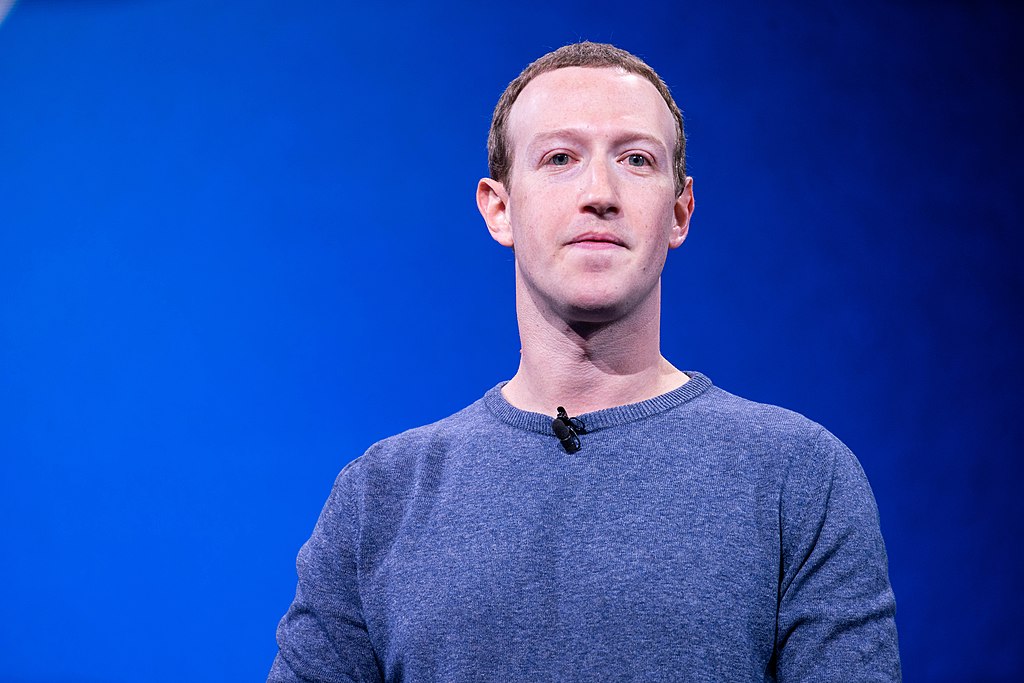
At this time, Mark Zuckerberg is hesitant to experiment with neural chip implants. The CEO of Meta discussed brain-computer interfaces in a Friday-published episode of the "Morning Brew Daily" podcast.
"One of the wilder things that we're working on is this neural interface," Zuckerberg said. "I don't mean like a chip that you jack into your brain. Maybe in the future someone will do that, but I wouldn't want to use Version 1 of that."
He continued, "You might want to wait until that one is fairly mature. "Let's not wait until that item no longer requires an annual upgrade."
Although he did not specify a company, Elon Musk's Neuralink is the most recognizable name among those developing brain-computer interfaces.
There has yet to be a prompt response from Mark Zuckerberg to a request for comment.
Musk's Neuralink Debuts Brain Implant in Human, Aims to Revolutionize Disability Aid
Elon Musk stated that Neuralink implanted its device into the brain of a human patient for the first time last month. Neuralink intends to "solve" autism and schizophrenia and enable individuals to operate devices such as a computer or phone simply by thinking about them. It is generally accepted that autism and schizophrenia are disorders and not diseases.
Brain researchers are skeptical that Neuralink's technology could "solve" anomalies in the brain or alter its developmental architecture; instead, they believe it could facilitate the navigation of the environment for paralyzed patients.
Regarding Meta, Zuckerberg elaborated on the organization's development of a device that integrates artificial intelligence and reacts to user hand gestures, enabling actions such as sending messages to friends via text.
"You'll be able to, in the future, essentially just like type and control something by thinking how you want to move your hand," he said. Neuralink did not respond to a request for comment at this time.
Neuralink Implants First Human Brain Chip, Musk Hails Milestone in Medical Tech
Elon Musk asserted in a Monday post on X that a Neuralink brain implant was successfully implanted into the brain of a human patient for the first time.
"The first human received an implant from @Neuralink yesterday and is recovering well," Musk wrote. "Initial results show promising neuron spike detection."
In a subsequent post, Musk mentioned the initial product as Telepathy, stating that it "permits thought-based control of your phone, computer, and nearly any other device." The initial users will consist of individuals who have suffered limb amputations.
"Imagine if Stephen Hawking could communicate faster than a speed typist or auctioneer," he continued. "That is the goal."
Elon Musk had previously asserted that the Neuralink device would function as a "Fitbit in your skull," recording and stimulating brain activity. He further claimed that the implant would eventually "solve" conditions such as schizophrenia and autism.
According to a 2019 Business Insider article by Hilary Brueck, neuroscientists are skeptical that Neuralink will have the capability to "solve" mental health conditions or alter the developmental architecture of the brain in the presence of Alzheimer's disease.
Nevertheless, the technology could prove efficacious in stimulating electrodes, thus facilitating enhanced mobility for paraplegic individuals or restoring vision to blind people. Neuralink representatives should have responded promptly to a Business Insider request for comment.
Photo: Anthony Quintano from Westminster, United States, CC BY 2.0, via Wikimedia Commons








.jpg)