


 Synthetic data could ease people’s concerns about privacy breaches. But who gets to create it?
  US-China Talks Target AI, Tariffs Ahead of Trump-Xi Summit
  Vietnam Stocks Join FTSE Emerging Market Indexes, Unlocking Billions in Foreign Investment
  Canada Eyes India Trade Deal by Year-End
  Wall Street Surges as Meta Leads AI Rally, Oil Prices Fall
  FxWirePro- Crypto Weekly Alpha: ETF Rebounds, L2 Rallies & Key Resistance Levels
  Who should own the knowledge that underpins AI technology?
  Strait of Hormuz Oil Shipments Hit Six-Month High as U.S. Clears Mines
  UK Home Asking Prices Rise for First Time Since May
  Big AI wants to slow down AI research. Is it a safety pause or a strategic retreat?
  Oil Prices Rise as Houthi Strikes on Riyadh Fuel Middle East Tensions
  Bolivia Approves $1.9 Billion IMF Financing Deal
  AI is supercharging money scams – here’s what you can do to protect yourself


 Add as a preferred source on Google
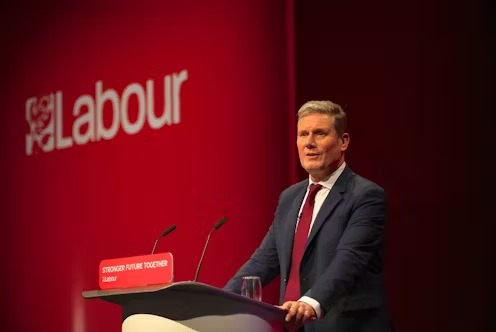

The new Labour government has fully laid out its plans for the UK in its first king’s speech to parliament. There were 40 new bills in the speech, aimed at setting a clear agenda focused on growing the economy and improving living standards for working people. And yet there were several pressing issues that went unaddressed.
The government says its aims are to stimulate economic growth, enhance workers’ rights and promote environmental sustainability.
Among the top priorities are the planning and infrastructure bill and the national wealth fund bill, which are designed to boost the economy.
The government also intends to empower local regions through an English devolution bill, and advance the UK’s commitment to Net Zero emissions with the GB energy bill.
Additionally, workers’ rights will be strengthened via the employment rights bill, and public safety will be bolstered through the crime and policing bill as well as the border security, asylum and immigration bill.
It is a packed agenda with many bills, which set out to stimulate what Labour is calling a revitalised economy after years of Tory mismanagement.

Labour’s new Chancellor Rachel Reeves is leading the government’s efforts to revitalise the economy. Fred Duval
Chancellor Rachel Reeves has made it very clear Labour expects to grow the economy and pay for initiatives that way. In other words, without having to raise taxes.
A significant shift in transport policy is marked by the nationalisation of railways and the establishment of Great British Railways. This will take us back to the days of British Rail when the state ran the train system in the UK.
The success of this approach will be dependent on the reliability of the trains, after years of problems with delays, and private contractors facing criticism for the way they ran train services.
The government had to take over some services because of poor performance. So, a fully functioning, efficient rail system will be vital to Labour’s plans to get the country running well again.
But despite this ambitious legislative programme, several pressing short-term challenges remain unaddressed.
A notable omission is the issue of public sector pay. The government faces the urgent task of finding an extra £7 billion annually to bring public sector wages in line with private sector earnings, which have risen by 4% since 2010.
Currently, public sector wages are lagging behind, with nurses, teachers, and doctors earning 5%, 10%, and 15% less than 2010 levels, respectively.
Without addressing this wage disparity, the government may struggle to meet its pledges, such as recruiting an additional 6,500 teachers and reducing NHS waiting times.
These targets are again key to ensuring the country is running well, and is not dogged by inefficiency in many different sectors.
Local council finances also present a critical challenge, with nearly 10% of councils facing bankruptcy this year, and half expected to go bust during this parliamentary term unless budgets are increased.
Potential solutions include providing direct financial aid to struggling councils, allowing them to raise council taxes further, or reducing mandatory local services. Each of these options carries significant drawbacks, either burdening the Treasury or proving unpopular among residents.
Education, education, education
Ensuring the country has the talent to drive Labour’s economic “recovery” means education funding is a key area.
And higher education finance is an area of concern, with university tuition fees frozen since 2017, raising the spectre of potential university bankruptcies this year.
The recent decline in income from foreign students has exacerbated financial pressures on universities. The government faces a difficult decision: whether to allow universities to increase tuition fees, which would likely provoke student backlash, or to enable them to admit more overseas students, risking criticism from those advocating for reduced net migration.
What’s more, the issue of water quality and the financial stability of water companies, like Thames Water, demands attention. With a debt of £15.2 billion and cash reserves only sufficient until May 2025, Thames Water may require government intervention to ensure continued service to 16 million households in the south east.
The government must decide whether to wait and hope the company can secure private sector funding or to proactively place it under special administration, a form of temporary nationalisation.
Prison overcrowding also remains a significant problem, with the potential to address it through planning reforms to build more prisons. However, the King’s Speech did not propose any sentencing reforms to alleviate this issue. These unresolved challenges necessitate tough decisions from the government, which, while not requiring new legislation, will likely be both costly and unpopular.
Labour has promised to build 1.5 million homes over the next five years to help solve the crisis in the supply of housing. This will require the full support of construction companies, who must have the capacity to build on this scale, and local authorities which are under pressure to restrict building.
There was some legislation in the king’s speech designed to make this happen, which was essential given that the previous government missed a similar target during its five years in office.
The Planning and Infrastructure Bill is to “accelerate” the delivery of housing and infrastructure projects by reforming the planning system.
By making local authority planning decisions quicker and more straightforward, the government hopes to clear the logjams preventing building from going ahead.
There are questions about whether this goes far enough in order to reach the target of new homes, and only time will tell us whether it is sufficient.
Small businesses may feel left out of the government’s agenda, but there is plenty of content designed to stimulate the economy and get the country moving in the direction Labour wants.







