


 Petrobras Launches Cardano Apps to Track Low-Carbon Fuels
  CFTC Moves to Define Prediction Markets as Swaps
  Ripple Locks 700 Million XRP Back in Escrow After October Release
  DogeOS Launches Testnet to Bring DeFi Apps to Dogecoin
  Sanofi, Regeneron Expand Drug Partnership in $8 Billion Deal
  Standard Chartered Sees Ethena ENA Hitting $2 by 2028
  XRP Ledger Hits 10 Million AI Payments as Bitcoin Retreats
  WordPress Malware Uses Ethereum to Evade Removal
  Citi Raises Bitcoin Target to $113,000 as Crypto Outlook Improves
  DeepSeek, Huawei Partner on Ascend AI Chip Programming Tools
  Lynas Shares Slide on A$968 Million Meteoric Resources Deal
  Binance Pay Goes Live at PayPay Merchants in Japan
  Evernorth Set for Nasdaq Debut With 473 Million XRP Treasury
  Apple iPhone 18 Pro Sales Jump 12% in China
  Coinbase, Visa Back Open USD Stablecoin Launch
  Michael Saylor Sees Strategy, Strive Expanding Bitcoin Credit Market
  Nike Stock Slides as Revenue Miss Clouds Turnaround


 Add as a preferred source on Google
Written by: James Carnell
Photo by Alireza Teymouri
There is no doubt that your favorite chips or candy company is spending thousands, if not millions, of dollars on the packaging of their food. Colors, graphics, shapes and designs are carefully curated to grab your attention and increase your desire. So, how strange is it to think that the very packaging that they are spending this money on is destined to end up thrown away, to spend the rest of it’s (very long) lifetime in a landfill.
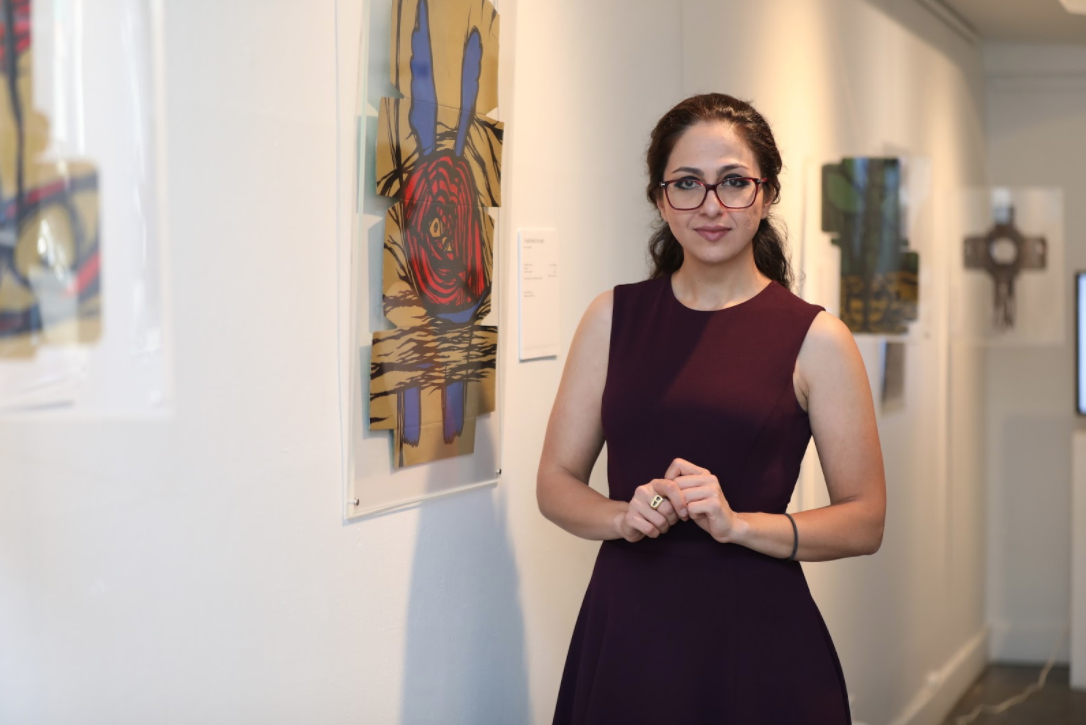
Bita Mokhtar Masoumi is an internationally recognized visual artist whose life has offered a different perspective and understanding. As a young girl, growing up in Iran during the Iran-Iraq war, Bita had a deep understanding that food supplies were, in fact, limited and that every action taken (by an individual, as well as by a collective) has direct and indirect consequences. Through this lens, she was appalled at the overconsumption and extravagance of Western society when, later in life, she moved to the US to complete her MA in Graphic Design. After finishing her studies, Masoumi started working as a graphic designer, creating a powerful brand and visual identity for many international enterprises. Her experience with commercial design encouraged her to create the art to invite the viewers to question the sustainability and ecological impact linked to consumption .
Masoumi cannot remember a time in her life when art was not present. Her grandfather was a respected painter, who studied under the well-known Kamal-ol-Molk, and her family encouraged her as an artist by facilitating art lessons to enhance her natural abilities. Although she notes artists such as Sohrab Sepehri and Forough Farrokhzad as inspiration, she has a very unique style and has even founded her own style: Recycled Painting. Recycled Painting is done by using scrap pieces of waste material, predominantly food packages, as the canvas for painting. In her own words, Bita says that “Recycled Painting is [a silent protest] against waste, such as food waste.”
While this process began as a fun way to pass the time and explore creativity on the go, Recycled Painting later became a therapeutic tool for Bita. After losing her father at only 17 years old, she experienced a great deal of sorrow and grief. Releasing these emotions by drawing or painting on whatever she could find in the moment, allowed her to heal and process her pain. In adulthood, Bita became much more passionate about social and environmental issues, and this added an even more profound element to her work.
With every piece that she creates, Masoumi gives new life to something that would be thrown away as useless. She often uses scraps from items that she has already purchased, and even requests that friends and family save their most prized scraps for her. Her graphic design background provided her with a fine-eye to see the potential beauty in these pieces of trash. Although her inspiration comes from her own emotions and life experiences, she also allows the shape, texture, color and dielines of each package to help guide the work. She feels that painting on rectangular canvas is not only expensive but also quite boring, and relishes the challenges that Recycled Painting can bring. Bita loves that this approach makes her artwork limitless.
“In a more basic sense, there will likely never be a shortage of supplies and many of my materials are free, but in a more meaningful way it is limitless because it is not confined by any traditional style or pre-conceived ideas,” said Masoumi.
As a viewer of Masoumi’s work, we are asked to reconsider our understanding of beauty and to think outside of the box in regards to what materials hold value. For her, every beautiful piece of paper that ends up in the garbage bin is a piece stolen from nature. Although she saves an overall small percentage of trash from ending up in the landfills, her message has a strong impact. She hopes that her work will ignite something in her audience. Perhaps they will reflect on their own over-consumption and reconsider how much waste they create in their own life. Or perhaps they will simply wonder “Why has this artist painted on food packages?”. Either way, this curiosity can spark the beginning of change and at the very least open up a conversation.
Awareness is so often the first step to meaningful transformation. There is no doubt that Bita Mokhtar Masoumi’s work will invite much greater awareness to this very serious social and environmental issue.
This article does not necessarily reflect the opinions of the editors or the management of EconoTimes







