


 U.S. Urges China to Help Curb Iran’s Actions in Gulf, Rubio Says
  Trump Pushes China Market Access During High-Stakes Xi Summit
  S&P Global Revises Mexico Credit Outlook to Negative Amid Rising Debt Concerns
  Asian Currencies Slide as Indian Rupee Hits Record Low Amid Iran Tensions
  Gold Prices Steady Ahead of Trump-Xi Meeting as Inflation and Oil Concerns Persist
  Dollar Surges as Inflation Data Fuels Fed Rate Hike Expectations
  Trump, Xi Begin High-Stakes China Summit Focused on Trade, Taiwan and Global Tensions
  US Stock Futures Slip as Iran Tensions and Hot Inflation Data Pressure Wall Street
  Wall Street Futures Rise Ahead of Trump-Xi Summit as Tech Stocks Lead Market Rally
  US-China Trade Talks Begin in South Korea Ahead of Trump-Xi Beijing Summit
  Trump Says Iran Ceasefire ‘On Life Support’ as Oil Prices Surge Above $104
  Asian Stocks Steady as Iran War Concerns Persist Ahead of Trump-Xi Summit
  Oil Prices Hold Above $100 as Trump-Xi Meeting and Iran Conflict Keep Markets on Edge
  Australia Housing Tax Reform Sparks Debate Over Property Investor Tax Breaks
  Asian Stocks Edge Higher as Tech Shares Rise Ahead of Trump-Xi Beijing Summit
  ASX Names Former Euronext Executive Anthony Attia as New CEO
  New Zealand Budget 2026 Focuses on Fiscal Discipline and Infrastructure Investment


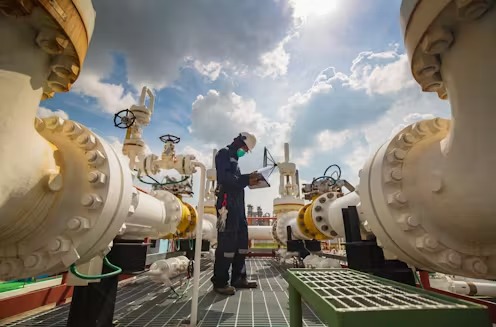

This week’s announcement of the government’s plans to reopen New Zealand’s territorial waters to oil drilling comes as no surprise. All three coalition parties campaigned on reversing the 2018 ban on offshore oil exploration.
But it flies in the face of projections that demand for oil could peak as early as this decade.
Minister for Resources Shane Jones has confirmed the government plans to reverse the ban later this year and seeks to incentivise oil investors by paying them a bond in case their drilling rights are cancelled by future governments.
The government is also considering weakening a law that requires oil and gas permit holders to pay for the decommissioning and clean-up of wells. This law was passed in 2021 in response to taxpayers having to pick up a NZ$400 million bill for decommissioning the Tui oil field after the financial collapse of the oil company.
The government’s decisions go against projections by many sources, including the International Energy Agency, that demand for oil will decline soon as we electrify the global transport fleet. Consequently, investment in oil exploration is projected to decline too.
Peak oil demand
The use of fossil fuels is due to decline this decade, according to several major oil companies. A 2023 report by Shell projects fossil fuel use dropping rapidly in coming decades, while BP thinks oil demand for combustion has already peaked.
Many large organisations think peak oil demand will happen this decade or the 2030s. This includes the International Energy Agency (IEA), which has predicted demand for oil will peak before 2030.
The Organisation of Petroleum Exporting Countries (OPEC) and Exxon Mobil are bullishly stating they see oil growth continuing, albeit at a slower rate, into the 2040s. But at the same time, Exxon Mobil is investing significantly in renewable energy, lithium mining and carbon capture technology.
Even if oil demand peaks later than forecast, the progression from prospecting to exploration and mining can take decades. Projects prospected now may not yield fuel until demand is already in decline.
We have enough oil to make the energy transition
We’ve known for some time that remaining fossil fuels must stay in the ground to meet the Paris Agreement goal of keeping the world below 2°C above pre-industrial temperatures.
The last UN climate summit – COP28 held late last year – agreed to “transition away from fossil fuels” and signalled the “beginning of the end” of the fossil fuel era.
But further to this, the IEA has stated we don’t need any new fossil fuel exploration or development, with enough projects already in existence or planned to meet global energy demand forecasts to 2050. New research agrees, saying governments around the world should stop issuing new oil, gas and coal licences.
In line with decreasing oil demand, BP also projects declining investment in new oil and gas infrastructure globally in coming decades. The IEA’s World Energy Investment report notes an ongoing hesitancy about oil and gas investment comes partly from concerns about downward long-term demand projections.
New Zealand does not import natural gas, but our gas fields have been yielding less than forecast for some years. Therefore, to remain independent, some more maintenance drilling or limited new expansion may be needed to see us through the energy transition. But using taxpayer dollars to pay international oil companies to come to New Zealand doesn’t make economic or environmental sense.
The momentum for the energy transition is unstoppable
The good news is that the world’s energy sector, which produces almost 75% of global emissions, is now transitioning at an ever increasing rate. Significant amounts of renewable electricity generation (which is now far cheaper than fossil fuel generation) are being built, with global renewable capacity set to double this decade.
New Zealand’s electricity system is already 85% renewable. Significant investment in renewable generation is under way ($42 billion by 2030) to supply the approximate doubling of electricity needed for the expected mass electrification of transport and industrial heat by 2050.
Renewables are also being built to replace retiring coal plant. Global coal consumption peaked in 2013 and has flatlined since. In 2021, the COP26 global climate meeting in Glasgow agreed to phase down coal, and 60 national (and 51 sub-national) governments have joined the Powering Past Coal Alliance, committing them to phasing out all coal-fired power plants and not building new ones.
Other uses of fossil fuels are in industrial heat and transport. Electric vehicle demand is skyrocketing globally, with the global fleet growing from 300,000 vehicles in 2013 to 41 million in 2023. With prices falling, electric vehicles are expected to reach price parity with internal combustion engine cars as early as 2025.
Most large global vehicle manufacturers have pledged to produce only electric vehicles by 2030 or 2040. And 30 countries, including New Zealand, have signed the Zero Emissions Vehicle declaration to ban new petrol or diesel vehicle sales entirely by 2040.
New Zealand should be enabling the energy transition
The world is moving very rapidly away from coal and oil, and eventually all fossil fuels. A growing number of countries require adherence to Paris Agreement pledges by their trading partners. The recently signed free trade deal between New Zealand and the EU imposes trade sanctions if Paris pledges are not met.
New Zealand’s current emissions reduction policies take us on a track that is much less than our per capita global fair share to limit warming.
New Zealand should be moving away from oil drilling and instead invest in the energy transition, including decarbonisation of industrial heat, subsidising low-emitting vehicles and charging high emitters, better public transport and bike lanes, increased EV charging infrastructure, and “urban mining” (recycling) of batteries and other technology currently filling rubbish dumps.







