


 North Korea Slams US Taiwan Arms Sales, Reaffirms Russia Support
  Mexico President Claudia Sheinbaum Reconsiders Early School Closure Plan Ahead of 2026 World Cup
  DOJ Launches Antitrust Investigation Into the NFL Over Broadcast Restrictions
  World game at war: why some European nations have threatened a World Cup boycott
  Trump Draws Cheers at Ryder Cup as U.S. Trails Europe After Opening Day
  Houthis Strike Aden Airport as Yemen Fighting Escalates
  Republican Lawmakers Urge National Guard Role for World Cup Drone Security
  Netflix, Disney, YouTube Eye FIFA World Cup TV Rights in Multi-Billion Dollar Battle
  White House Defends Trump’s FIFA Peace Prize Amid Global Criticism
  Trump Gaza Peace Plan Stalls as Israel Retains Control
  ISIS Attack Near Kirkuk Kills Iraqi Policeman After US Withdrawal
  Trump to Host UFC Event at White House on His 80th Birthday
  Milei Pushes for Formula 1 Return to Argentina
  U.S. Eases Iran Team Travel Restrictions Ahead of Seattle World Cup Match
  JD Vance to Lead U.S. Presidential Delegation at Milano Cortina Winter Olympics Opening Ceremony
  Trump Signs Executive Order Targeting Big-Money College Athlete Payouts
  Ethiopia-Tigray Fighting Intensifies as Airstrikes Kill 17


 Add as a preferred source on Google
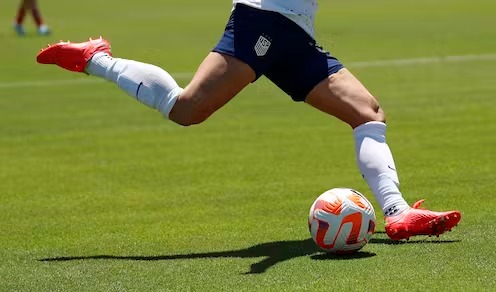
FIFA President Gianni Infantino defended the organization's disciplinary process after U.S. President Donald Trump praised the decision to suspend U.S. striker Folarin Balogun’s World Cup red-card ban, a move that has triggered widespread criticism over the governing body's independence.
Trump publicly called FIFA’s decision “brilliant” after personally urging Infantino to review Balogun’s suspension. The Arsenal forward was cleared to play against Belgium but failed to make an impact as the United States suffered a 4-1 defeat and exited the FIFA World Cup.
Infantino said FIFA’s judicial bodies acted independently and insisted he informed Trump that the Balogun case was subject to an ongoing legal process. FIFA later confirmed its disciplinary committee had the authority under Article 27 to suspend the automatic one-match ban while keeping the red card on Balogun’s record. The striker was also fined $40,000 for entering the field to celebrate after his dismissal.
The ruling has drawn sharp criticism from UEFA, the Royal Belgian Football Association, and several national football federations, which argued the decision undermines the integrity and consistency of FIFA’s disciplinary system. Belgium unsuccessfully challenged Balogun’s eligibility before kickoff, with FIFA rejecting the appeal on procedural grounds.
The controversy has also influenced other teams. England is reportedly evaluating whether to appeal defender Jarell Quansah’s recent red card following Balogun’s reinstatement, while British lawmakers have called on FIFA to apply disciplinary rules consistently.
Trump defended Balogun, saying the striker “didn’t do anything wrong” and suggesting excluding the U.S. star would have damaged the tournament. He also questioned the officiating of Brazilian referee Raphael Claus, whose integrity was defended by the Brazilian Football Confederation.
Prominent football figures also criticized FIFA. Former Liverpool manager Jürgen Klopp called the situation “madness,” while former FIFA President Sepp Blatter warned that disciplinary decisions should be based on rules and evidence—not political influence. The dispute has intensified scrutiny over FIFA’s governance and raised fresh concerns about the separation of politics and football ahead of the latter stages of the World Cup.







