


 Wall Street Ends Flat as Oil, Treasury Yields and Fed Jitters Rattle Markets
  U.S. Treasury Yields Surge as 30-Year Hits 22-Year High
  Gold Holds Near $4,275 as Rising Treasury Yields Fuel Fed Rate Hike Bets
  European Stocks Fall as Bond Yields and Geopolitical Risks Weigh
  Asian Stocks Fall as Bond Yields Surge Ahead of Trump-Xi Summit
  Trump, Xi Focus on Trade and AI at White House Summit
  Asian Currencies Mixed as Dollar Holds Near Two-Month High
  Mexico-US Trade Talks Delayed to October as Tariff Negotiations Continue
  Oil Prices Surge as U.S.-Iran Diplomacy Hopes Fade
  Soybean Futures Slip as Traders Await Trump-Xi Trade Signals
  US, China Extend Trade Truce to Jan. 10 Ahead of Trump-Xi Summit
  Asian Stocks Fall as Surging Bond Yields Rattle Markets
  Japan Private-Sector Growth Slows as Domestic Demand Weakens
  Australia Unemployment Hits Five-Year High Despite Strong Jobs Growth
  Fed Unveils Stablecoin Rules Under GENIUS Act
  Gold Prices Fall as Treasury Yields Rise on Fed Rate Hike Bets
  Oil Prices Jump 3% as Houthi Attack Revives Supply Fears


 Add as a preferred source on Google
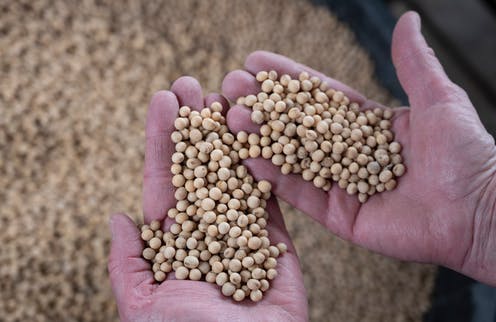
China is set to significantly increase imports of Brazilian soybeans in the first half of 2026 as record harvests and competitive pricing in South America outweigh renewed purchases from the United States. Trade sources say Chinese private crushers are actively securing Brazilian soybean cargoes for shipment starting February, when Brazil’s harvest accelerates and global supplies rise, putting downward pressure on prices.
Brazilian soybeans continue to undercut U.S. supplies on cost, even before tariffs are applied. China currently imposes a 13% duty on U.S. soybeans compared with just 3% on Brazilian shipments, making South American origins far more attractive for private buyers. While China has resumed U.S. soybean purchases following an easing of political tensions since late October, those deals—around 12 million metric tons—have been handled exclusively by state-owned firms such as Sinograin and COFCO, as higher U.S. prices discourage private participation.
Analysts note that demand for U.S. soybeans could weaken further when the American export season begins in September, especially if Brazil and Argentina deliver the expected bumper crops. Brazilian soybeans shipped between March and June remain particularly profitable for Chinese crushers, reinforcing expectations of higher exports to China compared with last year. Traders say Brazilian supplies are likely to remain cheaper than U.S. soybeans until at least September, when the new U.S. crop enters the market.
Market expectations earlier suggested China might cut Brazilian purchases after buying U.S. cargoes, but pricing dynamics have reversed that outlook. Brazil’s 2025/26 soybean production is forecast at a record 182.2 million tons, supporting strong export availability. Rabobank estimates Brazil could ship about 85 million tons of soybeans to China between September 2025 and August 2026, up 6 million tons year on year.
China’s soymeal demand is also expected to stay firm in early 2026, supported by a large pig herd despite government efforts to curb overcapacity. Although total Chinese soybean imports are projected to decline in 2025/26, Brazil’s dominance as China’s top supplier is likely to strengthen, driven by lower prices, ample supply, and favorable trade terms.







