


 U.S. Deploys Elite 82nd Airborne Troops to Middle East Amid Iran Tensions
  Air Canada Express Crash at LaGuardia: Controller Distracted by Prior Emergency
  Golden Dome Missile Defense: Anduril and Palantir Join Forces on Trump's $185B Space Shield
  SpaceX IPO Filing Expected This Week as Valuation Could Surpass $75 Billion
  Malaysia Semiconductor Industry Eyes Helium Supply Risks Amid Middle East Conflict
  Microsoft Eyes Legal Action as Amazon-OpenAI Deal Threatens Azure Exclusivity
  Bolsonaro Released from ICU After Lung Infection Battle
  Nvidia Develops Groq AI Chips for Chinese Market Amid Export Shift
  Trump's Overhaul of American History: Museums, Monuments, and Cultural Institutions
  Goldman Sachs Raises Oil Price Forecasts Amid Strait of Hormuz Disruptions
  OpenAI Pulls the Plug on Sora, Ending $1 Billion Disney Partnership
  Goldman Sachs Raises ECB Rate Hike Forecast Amid Persistent Energy-Driven Inflation
  Apple Defies China's Smartphone Slump with Strong Early 2026 Sales
  U.S. and Costa Rica Reach Deportation Transfer Agreement
  Berkshire Hathaway and Tokio Marine Form Major Strategic Insurance Partnership
  Xiaomi's AI Model "Hunter Alpha" Mistaken for DeepSeek's Next Release


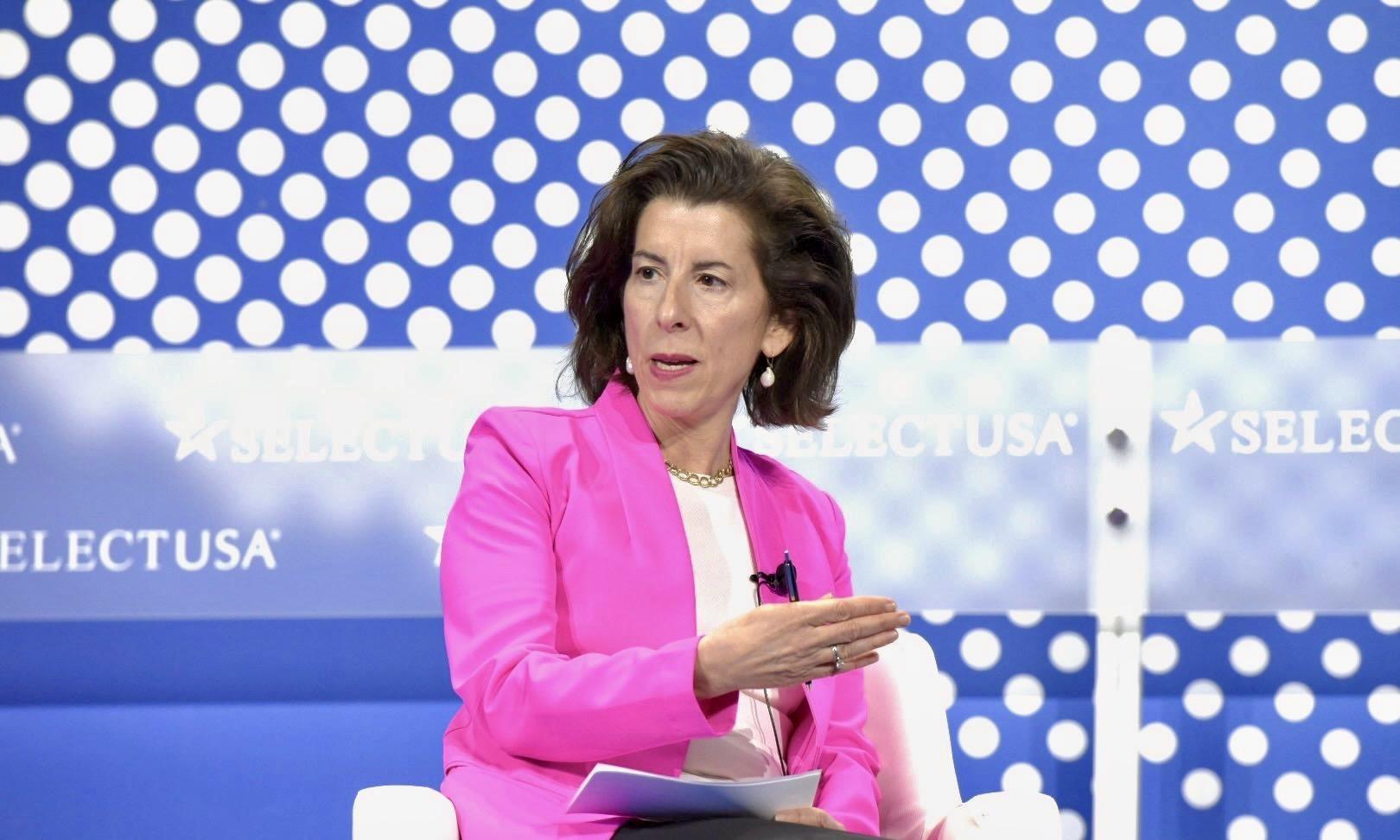
In an interview on CBS News' "60 Minutes," Commerce Secretary Gina Raimondo stated that the latest Huawei Mate 60 Pro phone's chip remains significantly behind U.S. technology despite being the most advanced from China. She asserts this validates the effectiveness of ongoing U.S. export controls to limit China's semiconductor advancements.
Despite Huawei's Recent Advances, the U.S. Maintains its Technological Edge, Affirms Commerce Secretary Raimondo
According to Reuters, Huawei, subject to trade restrictions since 2019, startled the industry and the U.S. government by releasing a new phone powered by sophisticated technology in August. Despite Washington's continued efforts to undermine China's ability to develop innovative semiconductors, the Huawei Mate 60 Pro was viewed as a sign of the country's technical revival.
Many saw it as a blow to Raimondo, who was in China then. However, in an interview with CBS News' "60 Minutes," Raimondo argued against that viewpoint.
"What it tells me is the export controls are working because that chip is not nearly as good, ... it's years behind what we have in the United States, she said. "We have the most sophisticated semiconductors in the world. China doesn't."
Washington has been working for years to prevent Beijing from obtaining advanced semiconductor chips and the tools required to manufacture them, fearing that they would be used to bolster China's military capabilities.
Huawei's New A.I. Laptop Stirs Controversy; U.S. Tightens Scrutiny Amid Ongoing Tech Tensions
Huawei, a symbol of that tech conflict, was included in the so-called entity list in 2019 due to concerns that it could spy on Americans. This would force its U.S. suppliers to acquire difficult-to-obtain permission to ship to the country.
However, its vendors, including Intel, have acquired billion-dollar licenses to continue selling to the corporation. This month, Huawei announced its first AI-enabled laptop powered by an Intel CPU has sparked outrage among Republican China supporters.
Raimondo was adamant when asked if she was harsh enough on big business.
"I hold businesses accountable as much as anyone," she told Lesley Stahl on "60 Minutes." "When I tell them they can't sell their semiconductors to China, they don't love that, but I do that," she added.
The Huawei phone also spurred the Biden administration to look into the specifications of the chip that runs it, which is the most advanced semiconductor China has ever made. However, specifics about the review have been few.
Photo: InternationalTradeAdministration/Flickr(PDM 1.0 DEED)













