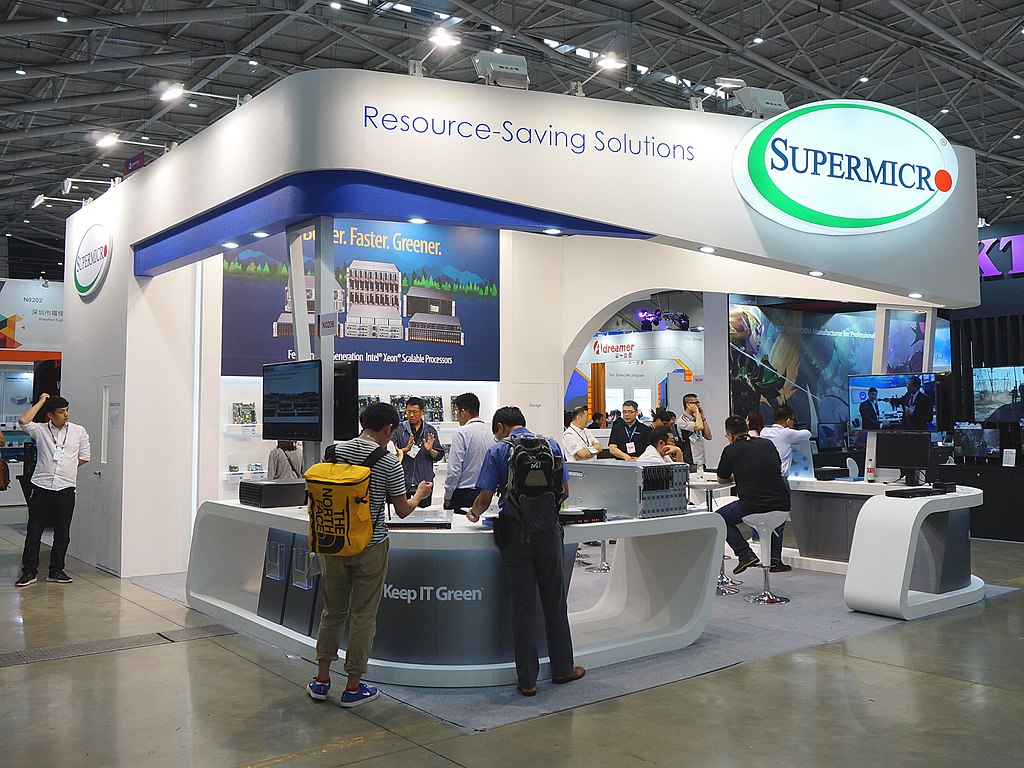
Super Micro Computer (NASDAQ: SMCI) said two employees at its Taiwan subsidiary have been detained pending a court hearing, while two others were released on bail after being questioned in an investigation into the alleged illegal export of advanced AI servers equipped with Nvidia chips.
Taiwanese prosecutors are examining whether the servers, which contain Nvidia's advanced artificial intelligence processors, were illegally diverted to China in violation of U.S. export controls. The restrictions prohibit the shipment of certain high-performance AI chips and related systems to China due to national security concerns.
According to Taiwan's Keelung District Prosecutors' Office, six individuals were questioned during a second round of searches conducted earlier this week. Authorities are investigating allegations of document forgery and breach of trust. Prosecutors searched 12 locations, including the homes of six suspects and the offices of Super Micro Taiwan, Albatron Technology, which serves as Super Micro's distributor in Taiwan, and data center operator Chief Telecom.
In a letter sent to customers in the United States, Super Micro Chief Revenue Officer Matthew Thauberger confirmed that four employees were questioned on June 29 as part of a Taiwanese investigation involving the company's product sales to a local technology firm. He said two employees remain detained while awaiting a court hearing, while the other two were released after posting bail.
Thauberger emphasized that Super Micro itself is not the target of the investigation and said the company has been cooperating with Taiwanese authorities for several months. He added that investigators were granted access to employee workstations and electronic devices, while all four workers were immediately placed on administrative leave until the investigation is completed.
The latest developments follow an earlier investigation launched in May, when Taiwanese prosecutors detained three individuals suspected of illegally exporting Super Micro's high-end AI servers containing Nvidia chips to the restricted Chinese market. Those three suspects remain in custody.
At the time, Super Micro stated it was assisting authorities in the investigation and said its cooperation helped lead to the seizure of 50 AI servers. The company maintained that the systems had been deceptively obtained after being sold to an authorized reseller.
The case also comes amid broader scrutiny from U.S. authorities. In March, the U.S. Department of Justice charged three individuals associated with Super Micro, including one of the company's co-founders, alleging they helped smuggle at least $2.5 billion worth of U.S. AI technology to China in violation of American export laws.
Taiwan plays a critical role in the global semiconductor industry as the world's leading producer of advanced chips used in artificial intelligence. The island has strengthened export control regulations in recent years to prevent sensitive semiconductor technology from reaching China, reflecting growing international efforts to enforce restrictions on advanced AI hardware and semiconductor exports.