


 Putin Visits Disputed Kuril Island, Sparking Strong Protest From Japan
  US CENTCOM Chief Praises USS Abraham Lincoln Crew Amid Mental Health Concerns
  Morocco Arrests 111 in New Ceuta Migrant Crossing Attempt
  US Admiral Visits USS Abraham Lincoln as Carrier Prepares to End Deployment
  Russia-Ukraine Drone Attacks Escalate as Strikes Hit Moscow, Kyiv and Romania
  Jared Kushner May Visit Israel for Gaza Talks Next Week
  Haftar Helps Broker Release of American Hostage Held by ISIS Affiliate
  Canada-US Trade Talks Gain Momentum Ahead of Aug. 19 Tariff Deadline
  US Weighs New Sanctions Against Brazil Supreme Court Justice Alexandre de Moraes
  US Presses Netanyahu to Condemn West Bank Settler Siege
  US Pressures Netanyahu to Condemn West Bank Settler Violence
  Israeli Troops Enter Qusra Homes as West Bank Settler Siege Continues
  Trump Imposes New Tariffs on Drone Imports Over US Security Concerns
  North Korea Slams US-South Korea Drills, Vows Stronger Nuclear Deterrence
  Albanese Says AUKUS ‘Full Steam Ahead’ After Trump Call
  Israeli Troops Enter Palestinian Homes as Settler Siege Grips West Bank Village


 Add as a preferred source on Google
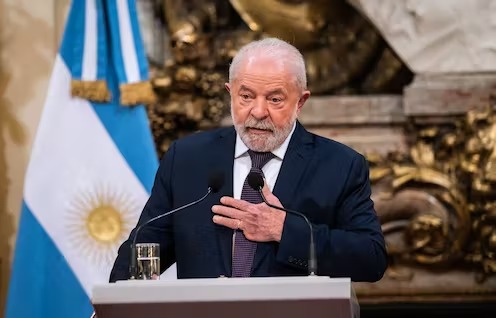
Brazilian President Luiz Inácio Lula da Silva launched his final reelection campaign on Sunday in Sao Bernardo do Campo, returning to the stadium where his rise as a labor leader began nearly five decades ago.
Speaking to about 20,000 supporters at the May 1 stadium, Lula celebrated Brazil’s working class and the labor movement that helped propel him from factory worker to the presidency. But ahead of Brazil’s October election, the Workers Party (PT) faces a new challenge: winning over millions of gig economy and informal workers who have little connection to traditional unions.
Brazil’s labor market has changed significantly. Formal employment accounted for 38.2% of workers in December, down from 46.7% at the end of 2010, despite unemployment reaching a record-low 5.1% in 2025. Lula said his government created 10.1 million formal jobs over the past three and a half years.
Meanwhile, an estimated 2.1 million Brazilians now work through digital platforms, representing 170% growth between 2015 and 2025. Many app-based drivers and delivery workers value flexibility and worry that government regulation could reduce their independence.
The PT has proposed a shorter work week and stronger protections for platform workers, including rules covering pay, social security, working conditions and algorithms. Previous regulatory efforts faced resistance from technology companies and workers, while a new bill remains stalled in Congress.
The political challenge is significant. Brazil’s unionization rate dropped from 15.7% in 2014 to 8.9% in 2024. A 2023 survey found 40% of platform workers identified with the political right, compared with 20% identifying with the left.
Still, informal workers show interest in greater security. A PT-commissioned 2025 survey found 65% aspired to become entrepreneurs, while 56% considered protections such as sick pay, injury benefits and a minimum wage very important.
Lula’s main right-wing rival, Senator Flavio Bolsonaro, is also courting younger workers. Launching his presidential campaign in Rio de Janeiro, Bolsonaro proposed a “My First Company” program and closer university-private sector partnerships aimed at expanding technology, innovation and employment opportunities.







