


 China’s Global Times Slams Anthropic CEO’s AI Slowdown Plan as ‘Cold War’ Strategy
  Banking scandal rocks Brazil’s politics and the country’s presidential election in October
  China’s robots can run faster than Usain Bolt – now they are being prepared for war
  Trump Vows to Keep U.S. Ahead of China in AI Race
  Houthis Escalate Saudi Attacks as Red Sea Oil Risks Grow
  Ukraine Tests New Anti-Drone Weapon After Successful Shahed Intercept
  Trump Rejects Calls for Tougher AI Regulation
  Judge Blocks Trump Rule Limiting Foreign Student Visas
  South Korea’s Cho Hyun to Meet Rubio in Washington
  Hyundai Delays In-House ADAS, Turns to Nvidia
  Ukraine Races to Counter Russia’s Faster Jet-Powered Drones
  SoftBank Shares Jump 8% as SB Energy IPO Optimism Builds
  MediaTek Unveils 2nm Dimensity 9600 Pro AI Chip
  Cyber attacks? Bioterrorism? To ‘Pace the Frontier’ of AI effectively, we must improve our anticipatory thinking
  Saudi Arabia Raises Security Alerts as Houthi Attacks Threaten Oil Routes
  Physicists zoom into the birth of cosmic rainstorms with new CERN study
  Samsung, SK Hynix Reject KEPCO’s $18.7 Billion Power Funding Plan


 Add as a preferred source on Google
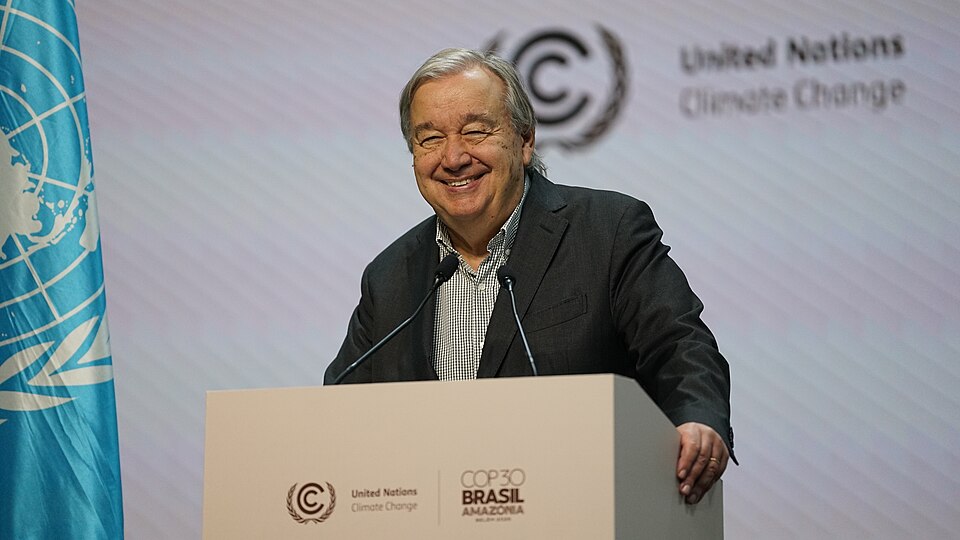
United Nations Secretary-General Antonio Guterres warned world leaders on Wednesday that the rapid development of artificial intelligence carries significant risks that governments cannot afford to overlook, highlighting a growing debate over global AI regulation.
Speaking ahead of next week’s U.N. General Assembly gathering in New York, Guterres said stronger oversight of advanced AI systems would be a key issue in his discussions with international leaders. He argued that governments have a responsibility to protect citizens from potential threats linked to increasingly powerful artificial intelligence.
The U.N. chief’s position contrasts with that of U.S. President Donald Trump, who said Monday that the United States already has sufficient criminal and regulatory authority to police AI companies and has opposed calls for tighter restrictions. Trump has also argued that slowing U.S. AI development could benefit China.
Concerns over AI safety have intensified after Anthropic researcher Jacob Coxon resigned last week, citing fears about the potential consequences of rapidly advancing technology. Several prominent figures in the AI industry have also called for stronger safeguards or a slower pace of development as increasingly capable systems emerge.
Guterres has consistently advocated international cooperation on AI governance. The United Nations has established mechanisms aimed at bringing governments, technology companies, researchers and other stakeholders into discussions about managing AI risks while ensuring countries can benefit from the technology. Recent U.N. initiatives have emphasized safety, accountability, human oversight and broader access to AI capabilities.
Artificial intelligence could also feature on the U.N. Security Council’s agenda during the annual gathering of world leaders, according to diplomats. The 15-member body first formally discussed AI in 2023.
The debate comes as Trump prepares to meet Chinese President Xi Jinping next week in Washington. U.S.-China competition over AI technology has complicated efforts to establish common international safety standards.
Guterres said governments need a shared approach that supports the safe, secure and responsible development of AI while determining when more powerful systems may require additional safeguards to address emerging risks.







