


 Meta CEO Zuckerberg Backs Independent AI Safety Reviews Over Development Slowdown
  Westinghouse Targets $50 Billion Valuation in U.S. IPO
  LVMH-Hermès Dispute Deepens Over Secret 2002 Share Deal
  Petrobras Joins Brazil Diesel Subsidy Program
  SpaceX Nasdaq 100 Weight to More Than Double in Rebalance
  US Northeast Airports Resume Operations After Telecom Outage Disrupts Thousands of Flights
  Meta Partners With Shopify to Bring Shop Pay Checkout to Muse AI
  SoftBank Shares Jump 8% as SB Energy IPO Optimism Builds
  Apple Pay Set for India Launch With Axis Bank
  FCC Approves Foreign Investment in $110B Paramount-Warner Bros. Deal
  Japan, U.S. Discuss $19 Billion GlobalFoundries Chip Plant
  AI is supercharging money scams – here’s what you can do to protect yourself
  Rosenblatt Starts Nokia at Buy on AI Networking Growth
  Nike Earnings at Risk as UBS Cuts Price Target to $42
  Trump Plans Federal AI Force and AI Czar
  NASA, Boeing Discuss Expanding Starliner Missions


 Add as a preferred source on Google
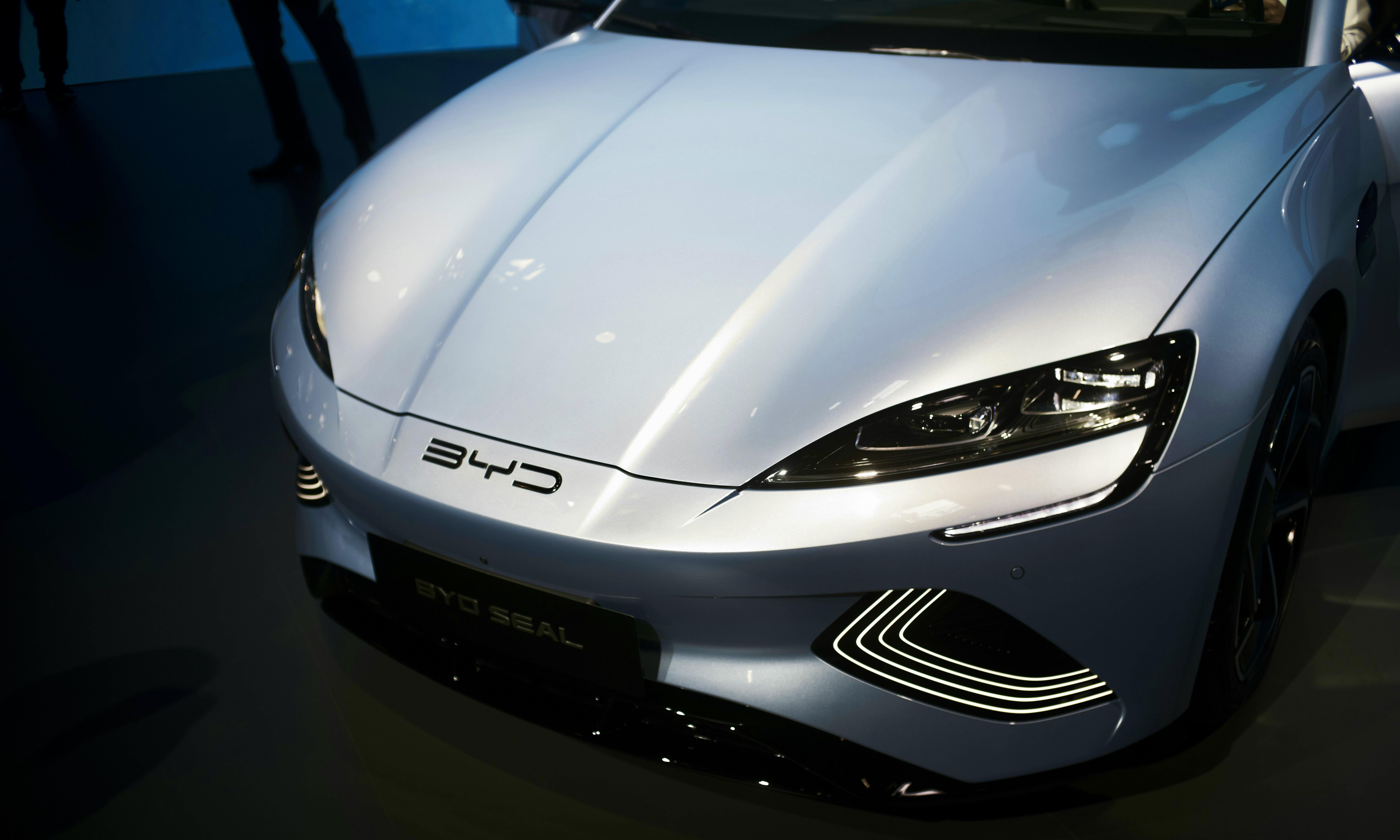
BYD's workforce has surged to 700,000, doubling since 2019, as the company unveils new hybrid technology, heightening its rivalry with Toyota
BYD Workforce Outpaces Toyota
Privately held companies, like BYD and others in the EV industry, drive job development in China. According to statistics, China had approximately 30.57 million employees by the end of 2023, a 13% increase from 2019. Private enterprises contributed 81% of the growth or 2.85 million employment.
BYD's workforce is now roughly twice that of Toyota, which is an indirect effect of this growth. With an additional 470,000 employees since 2019, BYD's workforce has grown to nearly 700,000, and Toyota currently has 375,000.
Electrek.co reports that the key drivers of China's job development are automobiles, electric devices, and semiconductors, all of which are driving the country's burgeoning electric vehicle market. According to the IEA's Global Electric Vehicle (EV) Outlook 2024, China accounted for 60% of global EV and PHEV sales last year.
China emerged as the global leader in automobile exports. 1.2 million of them were NEVs, representing an 80% year-over-year increase. As the surge in EV sales continues, the report projects that by 2030, one in every three vehicles in China will be electric.
One of the most critical elements in exporting nearly 4 million cars last year was the already low costs. 55% of electric vehicles sold in China in 2022 were less expensive than their average internal combustion engine equivalent, based on an IEA report.
Hybrid Technology Advancements by BYD
Competition between the two continues. On Tuesday, BYD launched the latest version of a plug-in hybrid technology that enhances fuel efficiency and cost savings, intensifying competition with Toyota and Volkswagen, which still offer primarily gasoline vehicles.
Assuming a full tank of gas and a fully charged battery, the technology can guarantee a range of 2,100 kilometers.
At an event in Xian, the capital of Shaanxi province, Wang Chuanfu, head of BYD, showed off the fifth generation of hybrid technology. This generation uses a record-low 2.9 liters of fuel per 100 km (62.1 miles) of driving on fully charged batteries.
Rising Rivalry in the EV Market
As per Yahoo News, Japanese automakers are facing more competition from BYD and other Chinese electric vehicle (EV) companies in areas outside of Japan, like Southeast Asia, Australia, and the Middle East, where trade barriers and tariffs are lower.
Photo: Michael Förtsch/Unsplash







